
Winter Outdoor Coffee Catering: Weather, Access and Setup
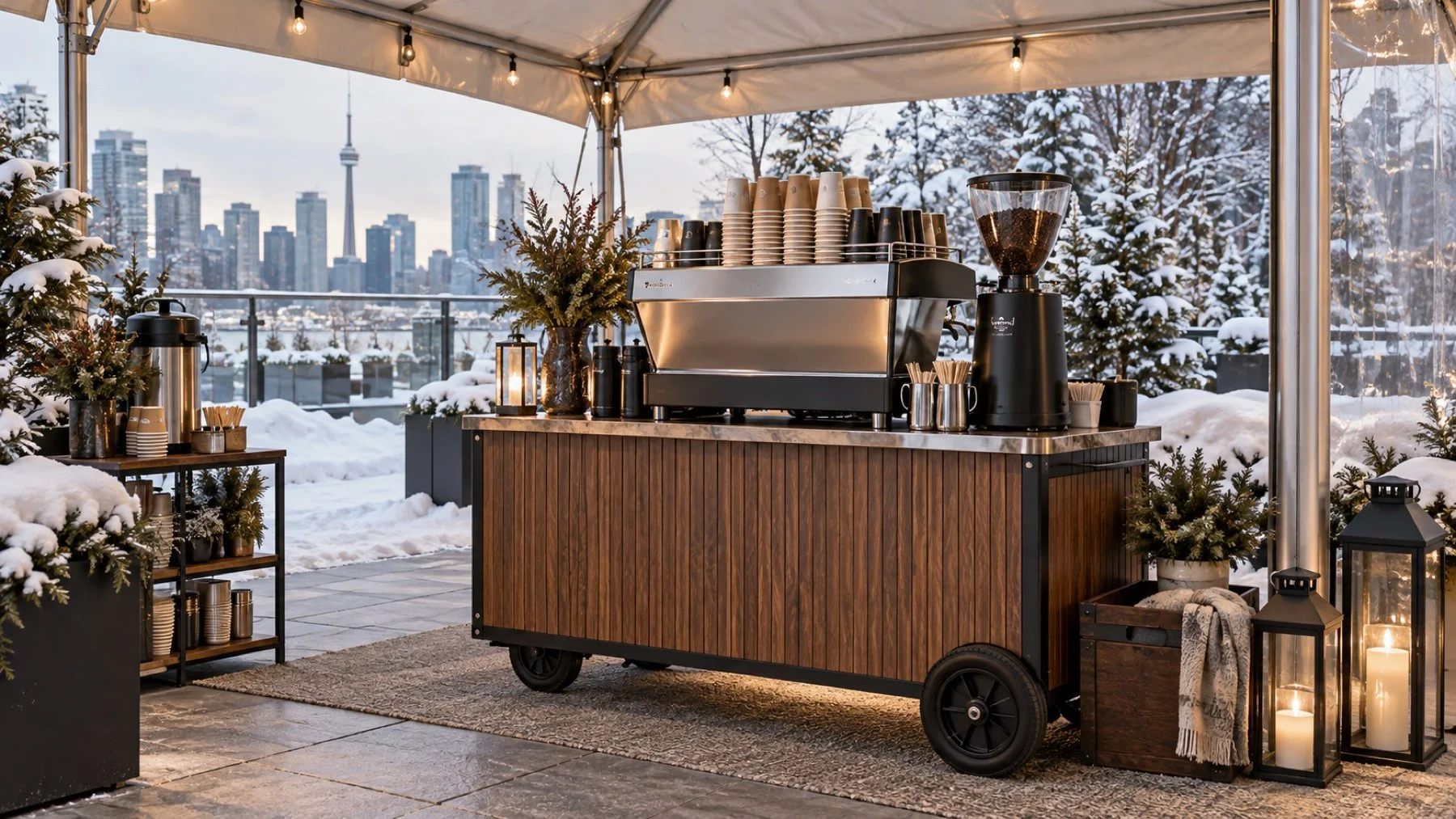
Winter coffee catering needs a workable outdoor site and a confirmed fallback. At NO.3 Coffee, we review the proposed service location before the setup is treated as final.
Winter coffee catering can work outdoors only when the proposed location is workable for the equipment, crew and guests. The first decision is not which latte to feature. It is whether the site has suitable cover, stable placement, access and an approved operating plan for the conditions expected that day.
For a Toronto event, bring the venue and coffee team into that decision early. Ask the supplier to assess the exact location and explain what it needs. Keep an indoor or better protected fallback available. Do not rely on a general temperature figure, heater assumption or equipment promise that has not been confirmed for your booking.
The Coffee Association of Canada found that 71 percent of Canadians drank a coffee beverage the previous day in 2025. An outdoor winter bar can serve a familiar habit, but the statistic does not remove the need for a safe site and a weather plan.
Outdoor placement does not remove food safety responsibilities. The Toronto Public Health vendor guidance covers requirements for special event food operations, including food handling and handwashing considerations.
Make the weather decision before the menu decision
Start with the event date, hours and exposure of the proposed coffee area. A courtyard beside a building behaves differently from an open field. A covered entrance may still face blowing snow or runoff. Describe the site honestly and share current photos from the same direction guests will approach. The coffee team can then identify the questions it must resolve with the venue.
Set a decision time for moving to the fallback. It might be tied to the event operations meeting or another agreed checkpoint. The contract should explain who makes that call and how the supplier will be notified. A clear decision path protects setup time and prevents the crew from arriving to find two possible locations with neither one approved.
Confirm cover, surface and guest approach
The station needs a level, stable place that the venue allows the supplier to use. Cover must protect the working area in the way the coffee team requires, not simply appear on a floor plan. Ask about snow clearing, water, wind exposure and the route between unloading and the station. Keep loose cords and guest pathways out of conflict by having the venue to review the proposed layout.
Look at the waiting area as carefully as the counter. Guests in coats take more room, and a line may form where people are entering the venue. Choose a location that does not block doors, ramps, stairs or staff routes. If the service supports arrivals, make sure guests can step away from the entrance after ordering.
Verify access and power for the exact setup
Ask the supplier what equipment it proposes and what connection each machine requires. NO.3 Coffee publishes differing power details across its pages, so a planner should not lift one number and treat it as universal. The written event plan should carry the current requirement for the selected station. The venue must confirm that the proposed source is approved and available during setup and service.
Do the same for access. Record parking or loading instructions, elevator restrictions, security check in and the name of the venue contact who can open the route. Winter conditions can make a long exterior carry more difficult. The coffee team needs to know the route before arrival so it can decide whether the location is practical.
Design a fallback that preserves the guest experience
A fallback should be a real location, not a note that says move inside if needed. Identify the room or lobby, confirm when it becomes available, and check the power and access plan there too. Decide how the menu board, queue and nearby event elements will move. If the fallback has less space, ask whether the proposed service needs to change.
Tell guests only what has been confirmed. Event copy can promise a coffee bar at the event without promising a particular outdoor spot. That gives the operations team room to make the safer choice while keeping the experience intact. The goal is dependable service, not defending a layout after conditions have changed.
Put one winter operations brief in everyone’s hands
Combine the location photo, loading route, access time, venue contact, power confirmation, service window, guest path and fallback decision into one short brief. Send it to the planner, venue and coffee team. Highlight any decision that is still open. A shared document is more useful than separate email threads that each contain part of the plan.
Review NO.3 Coffee’s mobile espresso bar and event coffee services, then check whether the venue sits within the listed Toronto and GTA service area. The quote should resolve the exact setup and weather conditions for your event.
Walk the site as if setup were happening now
A winter floor plan rarely shows the conditions that decide whether an outdoor station is workable. Stand at the proposed location and trace the route from the vehicle to the counter. Note locked doors, curbs, stairs, snow storage, narrow gates and surfaces that may become slippery. Then look upward and outward. Cover must protect the working area in the way the supplier requires, while side exposure can still bring wind or blowing snow into the station. Photos help, but a route description gives the coffee team the operational context behind them.
Repeat the walk from the guest perspective. People may approach in boots and heavy coats, then stop to read a menu while others are trying to enter the building. Mark where the queue begins, where completed drinks are collected and where guests can step away. The station should not narrow an accessible route or force people to wait in the path of doors. If the entrance is busy, shift service farther along the route or open after the main arrival wave.
Now test the fallback with the same care. Confirm that the indoor room is actually available during setup, not only during the public event. Check the route, power approval, floor protection, queue position and the point where signage will move. A fallback that has not passed these checks is only an idea. A verified second location gives the planner a decision that can be activated without redesigning the service while crews are arriving.
Write the weather decision into the run of show
Assign one person to make the location call and one deadline for making it. The decision maker needs input from the venue and the coffee team, but the final instruction should come through a single channel. Record how the change reaches loading staff, security and front of house. If the bar moves indoors, update any guest signage and event team notes at the same time. This prevents an outdoor setup team from following an old message after the planner has already changed the public plan.
Avoid a universal temperature threshold. Wind, precipitation, cover, equipment and venue rules can make the same temperature workable in one setting and unsuitable in another. Ask the supplier to state the conditions and equipment requirements that apply to this booking. Ask the venue to confirm what it permits. The event plan can then describe the agreed decision without turning a general website line into a guarantee.
Keep the menu secondary to the operating plan, but not separate from it. Cold weather changes how long guests want to stand outside and how they move while holding gloves, bags or event materials. Use a readable menu with familiar choices and a limited number of features. Confirm decaf and non coffee routes before printing. The goal is a warm, polished guest moment supported by a location the crew can actually reach and operate.
Decide when outdoor service is the wrong choice
Outdoor placement is not a goal to protect at any cost. Move the station when cover is inadequate, the surface cannot remain stable, the route is unsafe or the venue cannot confirm operating requirements. Also reconsider it when guests would have to queue across an entrance or accessible path. A polished indoor location is a better event decision than an exposed bar supported by last minute workarounds.
Use the supplier and venue responses to make that call. The coffee team evaluates its equipment and working area. The venue controls the property, approved connections and public routes. The planner connects those answers to the program and guest communication. No single party should improvise around an unresolved requirement after setup begins.
When the fallback activates, keep the public message simple. Update directional signs and staff notes, then let guests encounter the coffee bar in the new location. There is no need to explain the weather debate in event copy. The operational record should preserve the reason and decision time, while the guest experience stays focused on a warm drink and an easy path.
Confirm the cold weather service plan
- Photos of the preferred and fallback locations
- Venue approved cover and stable placement
- Written power requirements for the selected equipment
- Loading route, parking and access contact
- A guest path that keeps doors and accessible routes clear
- A named decision maker and weather decision time
Plan your NO.3 Coffee service
Ask NO.3 Coffee to review both the preferred outdoor location and the fallback. Send the venue details for a current event proposal before the layout is treated as final. We serve Toronto and the GTA. Review the current service area.