
Signature Drinks for Weddings and Corporate Events
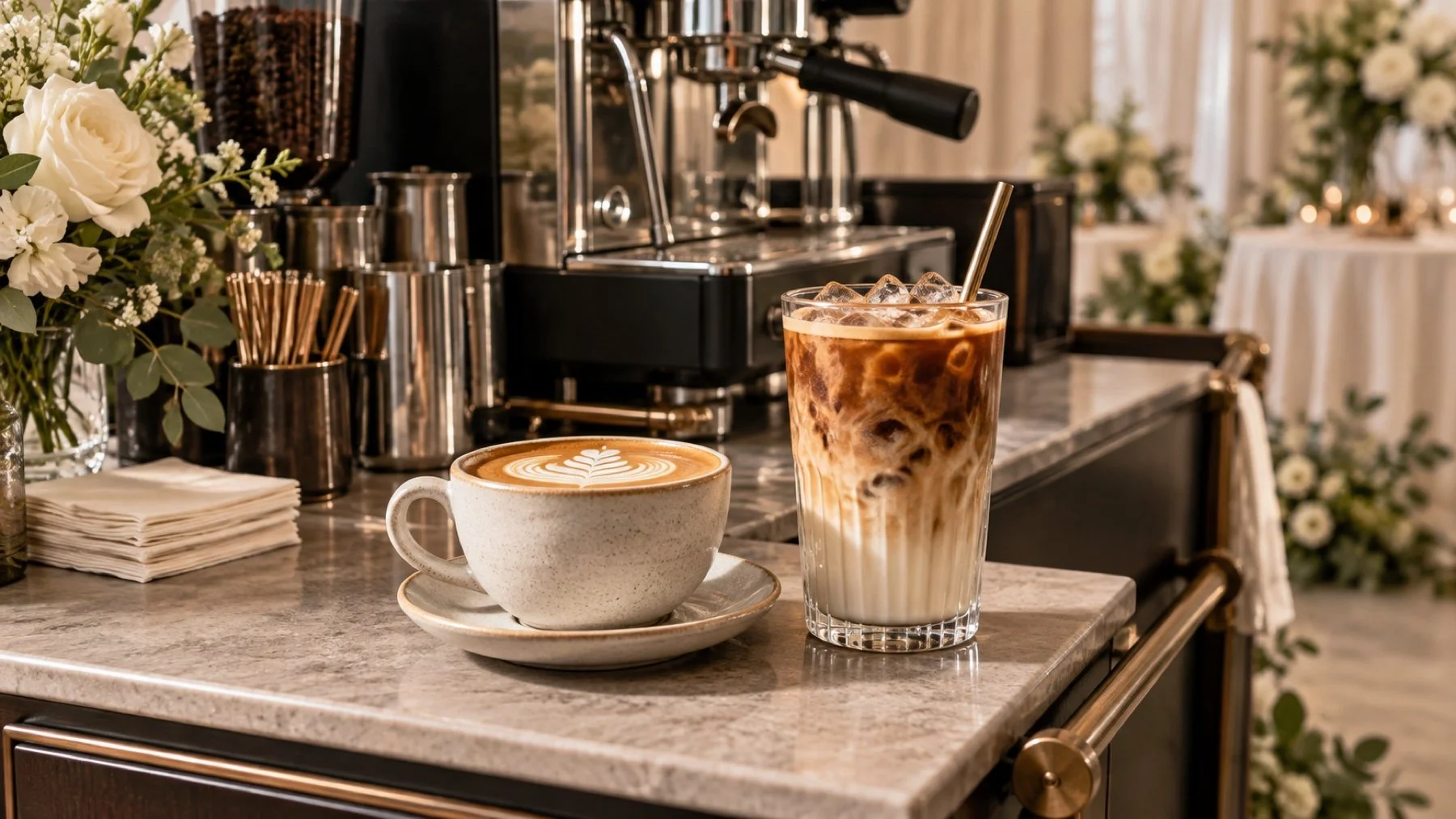
People-free event coffee bar displaying two elegant signature drinks with no visible branding
Signature drinks for events work when the flavour and presentation support a clear guest moment. At NO.3 Coffee, we begin with the audience and service window.
What should a signature drink actually do at your event? It can mark a wedding moment, support a campaign theme or give guests one easy seasonal choice. It should not become a complicated recipe exercise that slows ordering or leaves the barista team guessing about ingredients.
Start with the audience, service moment and flavour direction. Then give the coffee team room to recommend a practical version using its current menu and setup. NO.3 Coffee offers signature drinks and custom branding, but the exact recipe, ingredients, production details and timing should be confirmed in the written quote.
In 2025 research, the Coffee Association of Canada said 29 percent of Canadians had an espresso based drink the previous day. That broad interest gives an espresso feature context, while the event brief still decides whether a signature drink fits the audience.
When caffeine labelling matters, use the general information from Health Canada. It identifies coffee and tea as caffeine sources, which is why a non coffee signature drink is not automatically caffeine free.
Give the drink one clear job
At a wedding, the drink might accompany dessert or refer to a place, season or shared favourite. At a corporate event, it may extend a campaign theme or make a sponsor lounge feel considered. Choose one purpose. A drink asked to be seasonal, highly branded, universally familiar and suitable for every dietary need can become less clear rather than more inclusive.
Write a one sentence objective that the supplier can test. For example, ask for a warm fall drink that works during an afternoon conference break, or an elegant iced option for a summer reception. The sentence describes the planning problem without inventing a recipe.
Choose a flavour direction, not a finished formula
Use familiar language such as chocolate, maple, caramel, spice or a lighter coffee profile. Tell the team whether sweetness should be restrained or pronounced and whether the drink should be hot or iced. NO.3 Coffee’s live sample menus provide verified examples of its drink categories and seasonal names. They are a starting point for the conversation, not a guarantee that every flavour appears at every event.
Avoid sending a home recipe and assuming it will translate to a mobile event bar. Equipment, ingredients, service speed and presentation all affect what is practical. Ask the barista team to return a proposed description and ingredient list that can be approved before any menu board or guest communication is produced.
Name the drink after the concept is stable
A short name is easier to read and order. For a wedding, it might reference the couple or the season. For a business event, it might echo the campaign without making an unsupported product claim. Keep the name free of alcohol references because NO.3 Coffee’s event menu is positioned as non alcoholic.
Pair an imaginative name with a plain description. Guests should not have to ask what kind of drink they are ordering. If the name will appear on a custom board or cup, freeze the spelling only after the recipe direction and available presentation format have been confirmed.
Plan dietary communication with care
Ask which milk choices, decaf options and non coffee bases can be offered with the proposed drink. Disclose known allergies before the menu is approved. Do not label a drink allergen free simply because one ingredient has been removed. The service environment may still contain dairy, almond or soy products, and the supplier should explain its current handling process.
If caffeine is a concern, ask directly whether the drink contains coffee, tea, matcha or another caffeinated ingredient. A non coffee drink is not automatically caffeine free. Clear menu descriptions help guests make an informed choice without turning the event menu into medical advice.
Connect the drink to the full service plan
Confirm how the signature choice sits beside the core menu. It may be the visual feature while familiar coffee and non coffee choices remain available. Ask whether it changes equipment, ingredients, setup or ordering flow. The answer belongs in the quote so the planner can compare the idea with the practical event plan.
Use NO.3 Coffee’s sample menus for verified categories, review its custom branding options, and connect wedding ideas to the wedding coffee service. These pages frame the brief, while the current quote confirms what will be delivered.
Turn an event concept into a usable beverage brief
Begin with three sentences. Describe the event, the moment when the drink appears and the response the planner wants from the service. A wedding brief might ask for a warm evening drink that sits naturally beside dessert. A corporate brief might ask for an iced feature that reflects a campaign colour direction without copying a product claim. These sentences give the barista team room to recommend a practical drink while keeping the creative purpose intact.
Add a flavour boundary rather than a home recipe. State whether the direction should feel chocolate forward, lightly spiced, caramel based, fruit inspired or coffee led. Say whether sweetness should be subtle or pronounced. Identify ingredients or categories that the planner wants the supplier to avoid, while treating allergy handling as a separate discussion. This keeps the brief specific enough to guide a recommendation without pretending that an untested recipe is ready for mobile service.
Ask the team to return a plain description with the proposed name. The description should tell guests whether the drink is hot or iced, whether it contains coffee or another caffeine source, and which milk choices are available for that version. A playful name can carry the wedding or campaign idea, but the line below it must still help a guest order. Approve both pieces together before they appear on signage or event communications.
Protect the signature moment during live service
Decide where the feature sits within the broader menu. It can lead the board, occupy a highlighted section or appear only during a particular service window. Keep familiar choices nearby so guests who do not want the feature have a direct route. If the drink requires more explanation than a standard order, place the description where people can read it before reaching the barista. This reduces repeated questions without turning the station into a wall of copy.
Connect the presentation to the event environment. A branded board, cup treatment or logo latte art can extend the concept, but each option has its own approval path. Confirm which asset is being produced, who supplies the final artwork and when the proof becomes fixed. Do not advertise a branded element before the format and production scope are written into the proposal. Creative approval and service approval belong in the same final record.
Plan one backup response for the feature. An ingredient may need substitution, an iced idea may not suit the final room conditions or the selected presentation may miss its production deadline. Ask the coffee team what can be confirmed and what remains conditional. Then decide whether the backup keeps the same name, uses a simpler description or returns to the core menu. This preserves the guest experience without inventing certainty that the current booking does not support.
Use one tasting and approval path
Name the people who can approve flavour direction, menu wording and visual presentation. A couple may own the wedding idea while a planner manages deadlines. A corporate team may divide authority among brand, events and procurement. The coffee team needs one consolidated response. Conflicting edits from several approvers can change the concept without anyone seeing the whole drink.
Ask what kind of review is actually available. Do not promise a tasting, sample or production proof unless the supplier includes it. If approval happens through a written description and visual proof, read both together. Confirm the proposed ingredients, hot or iced format, plain guest description and presentation element. A name alone is not enough to approve the experience.
Freeze the final version before guest communication begins. Save the approved name, description and scope with the event proposal. If the signature drink changes later, decide whether invitations, menus or signs also need revision. This keeps a creative feature from becoming a source of operational drift in the final days before the event.
Before artwork goes to print, ask one person to read the final drink description against the supplier’s approved ingredient list. Another can check the event name, date and spelling on any board or cup proof. Keep those approvals with the event proposal. A small copy change is easy to miss when the recipe, sign and planning email live in separate files.
Settle the signature drink brief
- Event type and service moment
- Audience and flavour direction
- Hot, iced or open to recommendation
- Dietary and caffeine questions
- Proposed name plus a plain drink description
- Any custom board, cup or presentation details that need confirmation
Plan your NO.3 Coffee service
Bring the event concept and service details together in one request. Ask NO.3 Coffee for a current event proposal and a signature drink recommendation for your date. We serve Toronto and the GTA. Review the current service area.