
Office Coffee Service: Retainer or One Time Event?
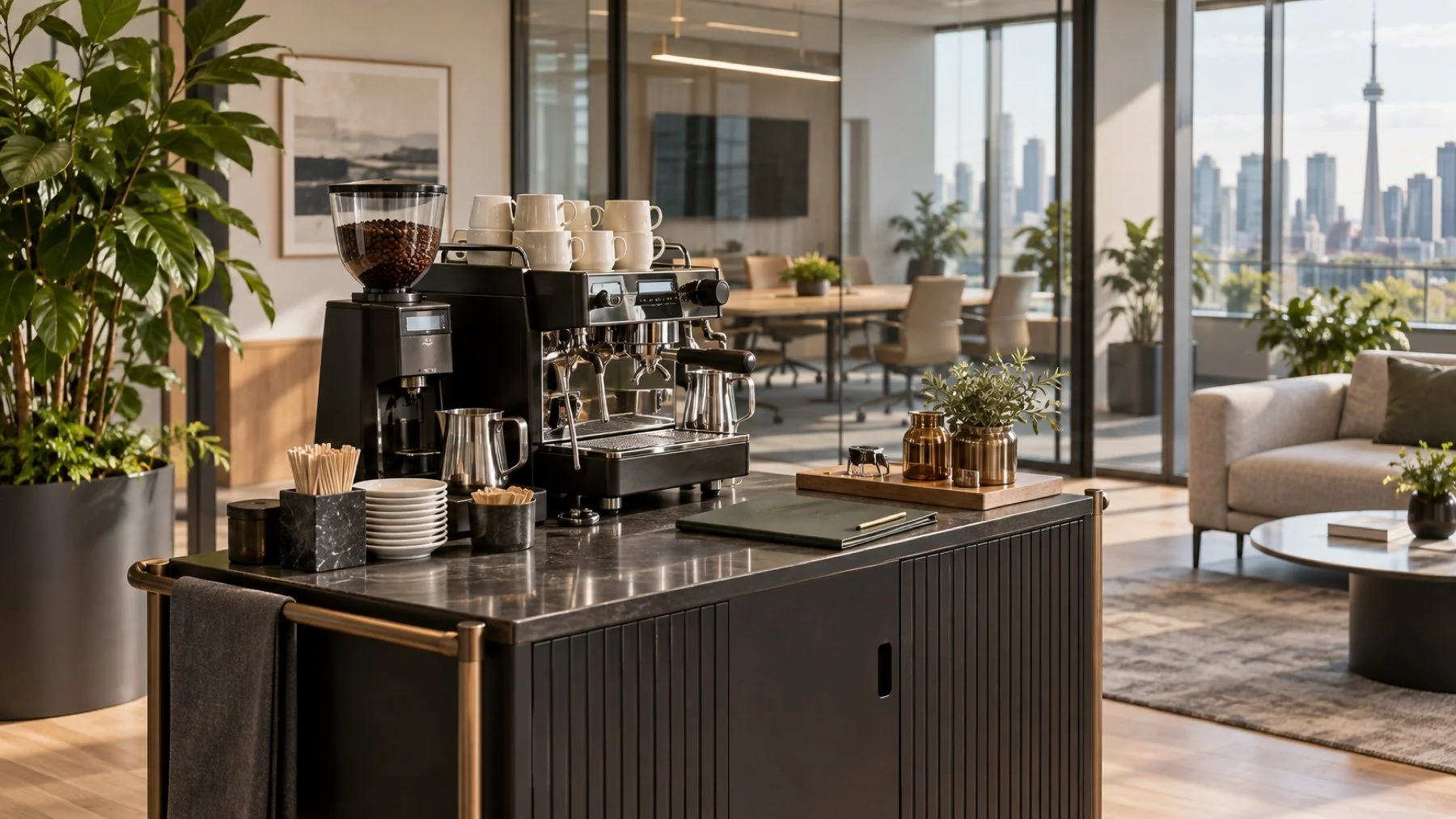
Office coffee service Toronto planning should separate staffed mobile events from pantry delivery. At NO.3 Coffee, we quote the event experience described in the brief.
A recurring office coffee service and a one time mobile espresso bar solve different planning problems. Choose recurring service when the company wants a staffed coffee experience on a predictable rhythm. Choose a single event when the need is tied to one meeting, appreciation day, launch or holiday gathering.
This comparison is about staffed mobile service, not pantry delivery or an office machine program. The right choice depends on frequency, internal workload, location consistency and the business moment the coffee bar needs to support. NO.3 Coffee lists both corporate events and recurring retainers, while the current quote must define the actual term and scope.
A 2025 Coffee Association of Canada study found that 71 percent of Canadians had consumed a coffee beverage on the previous day. That does not establish demand at one workplace, but it gives an office team a reason to measure actual attendance and repeat use before selecting a recurring rhythm.
For office events that fall within a special event food service context, consult the Toronto Public Health organizer guidance. A recurring arrangement should document compliance checks instead of assuming last event’s file still answers every question.
Separate mobile event service from pantry supply
Search results for office coffee service often describe bean delivery, machine rental, breakroom stocking or recycling. A staffed mobile bar brings baristas and event equipment into the workplace for a defined service window. Make that distinction in the brief so the proposals you receive answer the same need.
Ask stakeholders what outcome they want. A monthly appreciation bar, a quarterly town hall and a single client reception may all involve coffee, but they create different operational patterns. Name the audience and business moment before choosing a contract structure.
Choose a retainer when the operating pattern repeats
Recurring service becomes easier to plan when the address, loading route, station location, venue contact and general menu remain stable. The first event can establish the working setup, while later dates use an agreed process. The quote should still state how dates are requested, what may change and how each service is confirmed.
A retainer can also reduce repeated internal approvals when the organization has a clear budget owner and calendar. Do not assume a fixed frequency, rate or cancellation term. NO.3 Coffee’s public pages mention retainers without publishing those details, so the written proposal must carry them.
Choose one time service for a distinct event
A launch, annual meeting or holiday gathering may need a menu, layout or branding treatment that will not repeat. Quoting it separately lets the planner describe the exact audience and venue conditions. It also avoids forcing a special event into a recurring pattern designed for routine office service.
One time does not mean last minute. Venue access, security, power, placement and guest flow still need coordination. Share the run of show and identify when attendees are free to visit the bar. A coffee service during a keynote may look convenient on the calendar while producing little use.
Compare the internal workload honestly
List the tasks your team must perform for every service. These may include confirming the date, booking access, briefing reception or security, approving the menu, collecting dietary requests, coordinating branding and identifying the day of contact. A recurring arrangement is useful when it genuinely reduces that work through a repeatable process.
Also identify what changes from date to date. If every event moves floors, changes audience or requires new artwork, the workload may stay high even under a retainer. Ask the supplier to show which details can be standardized and which still require approval.
Build a proposal request that supports the decision
For recurring service, provide the expected rhythm, locations, typical attendance range, service windows and common menu needs. For one time service, provide the full event brief and any special presentation details that need confirmation. Ask the supplier to explain what is included, what the workplace supplies and how changes are handled.
Review NO.3 Coffee’s corporate coffee service, the custom package and retainer page, and the staffed mobile espresso bar. Then request a proposal that distinguishes recurring event service from pantry delivery.
Measure the office pattern before choosing frequency
List the occasions when staffed coffee service would appear during a normal quarter. Separate predictable moments, such as a monthly staff day or recurring client program, from one time occasions such as a launch, annual meeting or appreciation event. A retainer discussion makes sense when the audience, venue and service purpose repeat. A one time booking is cleaner when the date, room or program has its own operating plan.
Use attendance evidence that the workplace already has. Compare registration, badge access or room capacity with actual participation when those records are available and appropriate to use. Note which days bring teams together and when people arrive. Do not convert company headcount into an order forecast. The service proposal needs the expected audience and timing for each event, while the office team needs a simple way to update those inputs before every visit.
Identify the internal owner. Recurring service still needs one person to confirm the date, room, access and current audience. That owner also collects dietary requests, approves menu changes and alerts security or facilities. If those responsibilities move among several assistants without a shared record, a retainer can create more coordination than it saves. The recurring plan should reduce repeated decisions while preserving a clear event contact.
Compare the real administrative workload
For one time service, map every step from quote to event day. The team provides the brief, reviews the proposal, confirms venue needs and manages the final schedule. For a recurring arrangement, decide which of those steps become standard and which still require a check each time. The room or building may change. Attendance may rise. Security rules may be updated. A useful recurring agreement makes those exceptions easy to surface rather than assuming every date is identical.
Define the service as a staffed mobile experience, not pantry supply. NO.3 Coffee describes mobile coffee service for corporate events and recurring retainers. That is different from stocking beans, brewers or office kitchen products for self service use. Say which problem the office is trying to solve. If the goal is a hosted team moment, guest welcome or programmed break, a staffed service comparison is relevant. If the goal is everyday pantry replenishment, compare a different service category.
Request two scopes when the choice is still open. Ask for a proposal for the next distinct event and a separate description of how recurring service would be structured. Compare what becomes consistent, what remains variable and how changes are approved. Do not assume a term, frequency, cancellation rule or price. The written options should make the operational tradeoff visible before procurement treats a retainer as the default.
Set a review point before the pattern becomes permanent
A recurring plan needs a defined review after the team has seen how it operates. Decide which signals matter, such as attendance, timing, unused menu choices, access friction and organizer workload. The review is not a promise of savings or a particular service level. It is a structured check that asks whether the recurring format still serves the workplace goal.
Keep each event record even when the setup repeats. Note the date, room, audience, menu change and any operational issue. After several services, the office can distinguish a real pattern from one unusual day. That evidence supports a better conversation about frequency and format than general satisfaction alone.
If the pattern stops making sense, return to one time bookings or revise the brief. A retainer should not continue only because it is familiar. The office team should be able to explain the purpose, audience and internal owner for every scheduled service. That clarity keeps the experience intentional and makes future proposals easier to evaluate.
Budget review should follow the same distinction. Compare the current proposals, not a guessed monthly price or an old one time invoice. A recurring scope can change the planning rhythm, but it may also include variables that remain event specific. Ask how dates, attendance, room changes, menu changes and branding are handled in the proposal. Then identify what the office must approve for each service and what can remain standard. The result should be an operating choice the office understands, even if the final decision is to begin with one event and review recurring service later.
Compare recurring and one time service in writing
- Business purpose and audience
- One time date or expected recurring rhythm
- Address, access route and station location
- Typical service window and menu needs
- Internal approval and day of contacts
- Terms and change process to include in the proposal
Plan your NO.3 Coffee service
Tell NO.3 Coffee whether you are planning one office event or a recurring staffed experience. Request a custom proposal that makes the operating pattern clear. We serve Toronto and the GTA. Review the current service area.