
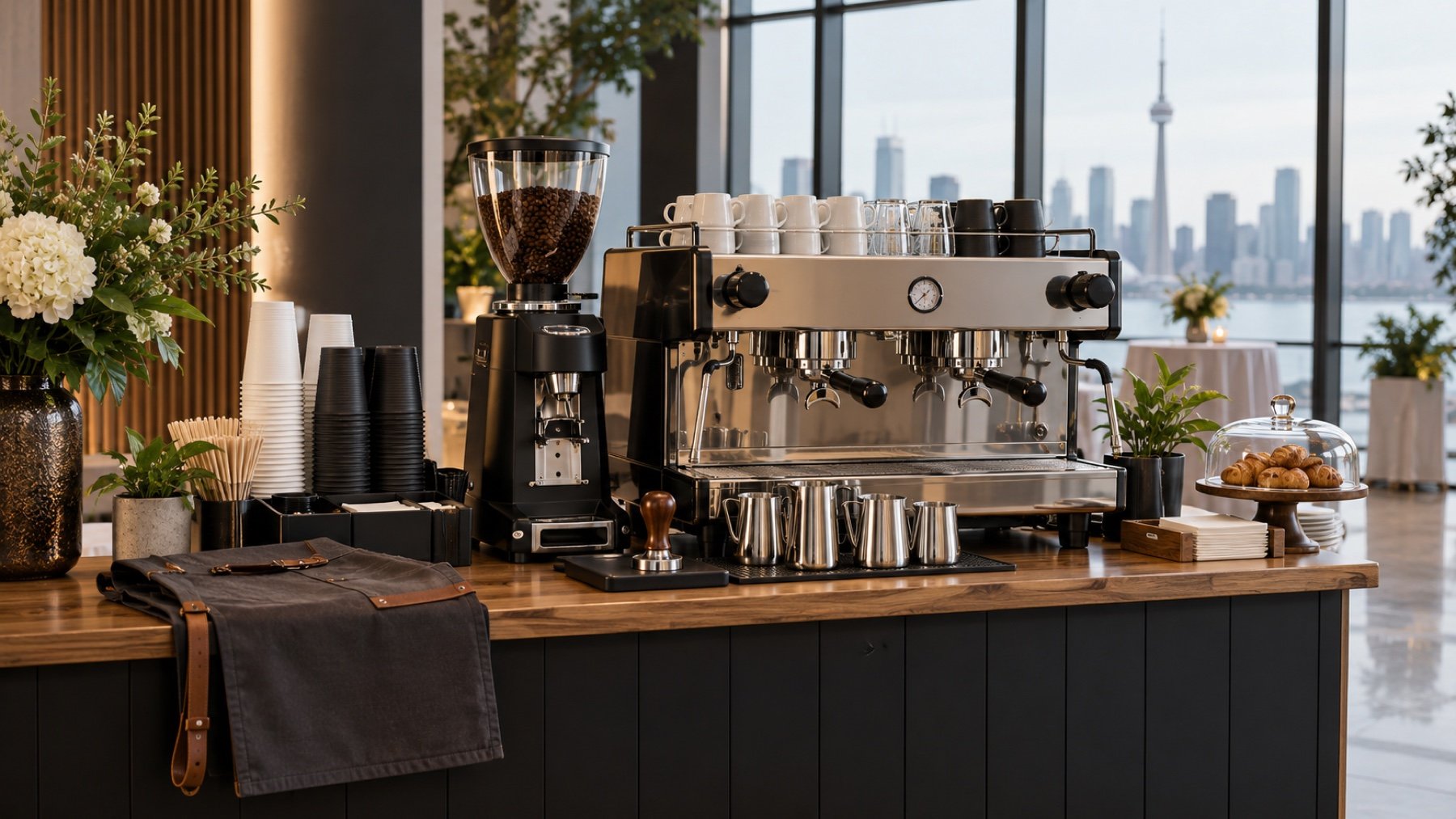
When you hire a barista for an event, confirm the people, equipment and operating scope together. At NO.3 Coffee, we describe the staffed mobile service in the proposal.
What do you receive when you hire a barista for an event? In a staffed mobile service, the barista is part of a larger operating package that may include espresso equipment, drink preparation, serving supplies, setup and cleanup. The exact inclusions depend on the supplier and the booking.
Compare staffed service with equipment only or self serve coffee by looking at the work each option leaves with your team. NO.3 Coffee offers staffed mobile espresso and coffee cart service in Toronto and the GTA. Use the current written quote to confirm equipment, staffing, menu, service time and venue requirements.
The Coffee Association of Canada reported that 29 percent of Canadians had an espresso based drink the previous day in 2025. A staffed bar can prepare that category to order, but the service scope must still define equipment, menu and operating responsibilities.
For Toronto special events, the Toronto Public Health food vendor guidance is a useful source for organizer and supplier questions. Ask for evidence that applies to the event rather than relying on a general assurance.
Understand the role of staffed mobile service
A professional barista prepares made to order drinks and manages the working side of the station. The service also needs a plan for equipment, ingredients, cups, waste, setup and venue coordination. Ask for those elements as one scope rather than assuming the word barista includes them all.
The guest facing role matters too. The barista explains the available drinks, handles orders and keeps the counter moving within the proposed setup. Do not ask for a universal drinks per hour promise. Menu complexity, arrival pattern, equipment and venue layout all affect service.
Compare staffed service with self serve coffee
Self serve coffee can suit a simple meeting where the host wants brewed coffee available with minimal interaction. A staffed espresso bar creates individual drink preparation and a more visible event moment. It also requires more coordination with the room, access and operating requirements.
Choose based on the event objective. If coffee is simply refreshment, self serve may answer the need. If the bar is part of guest experience, employee appreciation or brand presentation, staffed service may be the closer fit. Ask each supplier to describe the format it is actually quoting.
Confirm equipment, ingredients and serving materials
Request an itemized description of the proposed espresso machine or cart, grinders, menu ingredients, milk choices, cups, lids, napkins and any water or waste needs. NO.3 Coffee’s public pages list many of these elements, but some package descriptions conflict. The quote should resolve what is included for the selected service.
Disclose dietary requests and ask about ingredients and handling. Do not promise an allergen free station. If decaf, hot chocolate, matcha or chai matters to the audience, name those priorities in the brief and ask which can be offered together.
Plan setup, guest flow and cleanup
Give the coffee team the loading route, access time, station location and venue contact. Ask the venue to approve the placement and power requirements. Avoid copying exact figures from general pages because the equipment and specifications may differ. A current setup plan is more useful than a generic estimate.
Decide where guests will see the menu, wait and leave the counter. Keep doors and accessible routes clear. Confirm who removes waste and when the station must be clear of the room. These tasks are part of the event operation even when they are not the most visible part of hiring a barista.
Ask the written quote to settle the boundaries
The quote should identify the number or role of staff without making an unsupported capacity promise, the service window, menu, equipment, supplies, setup, cleanup, venue needs and change process. If branding is requested, add the artwork and approval responsibilities. Review the document against the run of show before signing.
Compare NO.3 Coffee’s mobile espresso bar, mobile coffee cart, and full event service menu. Then ask which staffed format fits the venue and audience.
Define the role before comparing inclusions
A staffed mobile barista service combines drink preparation with event operations. The barista works within a station that needs equipment, ingredients, serving materials, a venue position and an approved service window. Equipment only rental removes much of that operating role. Self serve coffee shifts preparation and replenishment to the host or venue. Write down which experience you expect before asking suppliers what is included.
Describe the guest interaction. Do you want drinks prepared to order, a short featured menu or a hosted welcome point? Say when guests arrive and what else happens nearby. The barista team can then explain the proposed format without relying on an abstract drinks per hour promise. Service planning is strongest when it starts with the actual audience wave and menu rather than a borrowed capacity figure.
Ask who owns each task. The proposal should identify equipment delivery, setup, ingredient supply, cups and serving materials, station operation, waste handling and cleanup. Do not assume those items from the word barista. Some may be included in the selected service, while others may depend on the venue or proposal. A responsibility list turns a broad service label into an event plan.
Give the barista team a venue it can operate in
Share the room and loading route before the layout is final. Mark doors, guest paths, food service, accessible circulation and the proposed queue. Add parking, dock, elevator or security instructions. Ask the supplier to state the power, placement and access requirements for the exact station it recommends. The venue should confirm those requirements in writing.
Build the menu around the service purpose. A morning meeting may need familiar coffee and decaf choices. A product event may add one signature drink or branded touchpoint. A family gathering may place more weight on non coffee options. Confirm milk choices and disclose known allergies without describing the station as allergen free. The barista needs an approved menu, not a list of ideas that changes at the counter.
Plan the event contact and decision path. One person should meet the crew, approve placement and communicate any schedule change. If that person is also running the stage or greeting guests, assign a backup. Put the names and mobile numbers in the supplier brief, not in the public article or menu. Clear ownership protects the service without making an unsupported promise about timing or capacity.
Know when staffed service adds value
Staffed service is most relevant when drinks are prepared to order, guests need guidance, presentation matters or the host cannot manage equipment and replenishment. It can also support a defined event moment, such as conference arrival or wedding dessert. The value comes from the combination of preparation and operating responsibility, not from placing a person beside a machine.
Self serve may suit a different brief where the menu is simple, the host accepts the operating work and the venue supports it. Equipment only rental creates another set of responsibilities for transport, setup, ingredients, cleaning and troubleshooting. Compare those duties honestly. A format that looks less expensive can create more internal work than the event team wants to own.
Ask the proposal to state the boundary clearly. If an item belongs to the venue or planner, name it. If it belongs to the mobile barista team, include it in the scope. This prevents a supplier comparison from treating different operating models as equivalent and gives the event contact a reliable checklist for the day.
The comparison should also cover what happens before and after public service. Confirm when the team can access the venue, who approves the final position, how the station is handed over ready for guests and when breakdown may begin. A barista’s visible work at the counter is only part of the service. The plan must also account for equipment movement, ingredients, cleaning and coordination with the venue. Ask for those boundaries in writing, then give the venue the requirements it must approve. This keeps the guest experience simple because the operational work has already been assigned.
If a planner wants custom branding or a signature drink, treat it as an added workstream with its own asset, wording and approval owner. Confirm it early enough to protect the core service plan. If it cannot be approved in time, keep the staffed bar and remove the unready element rather than rushing an unsupported claim or design.
Confirm the barista service before booking
- Staff role and service window
- Equipment and station format
- Menu, ingredients and serving materials
- Venue access, placement and power
- Guest flow and waste plan
- Setup, cleanup and change terms
Plan your NO.3 Coffee service
Describe the event moment, venue and audience to NO.3 Coffee. Request a staffed mobile barista quote with every inclusion listed. We serve Toronto and the GTA. Review the current service area.