
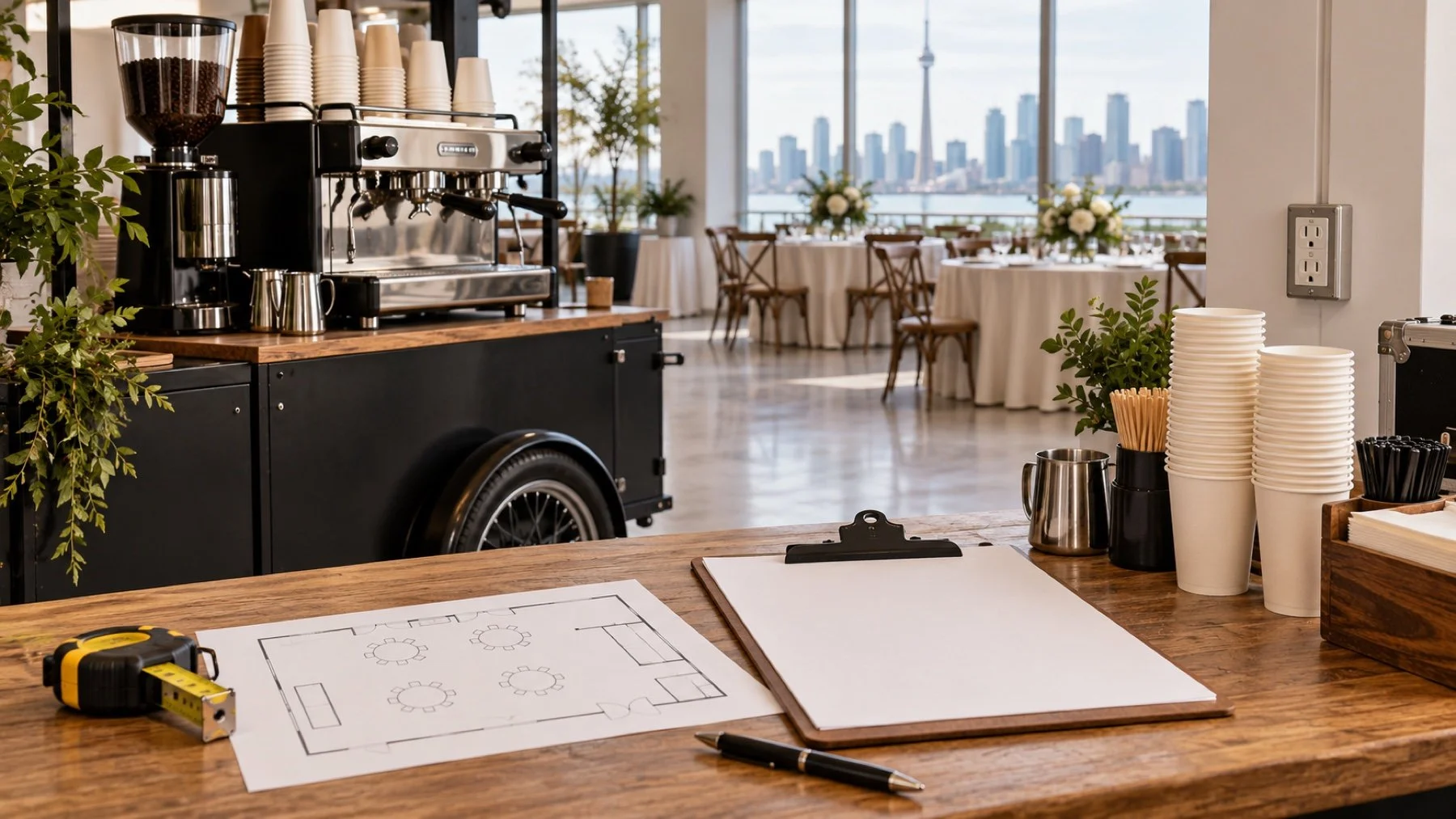
Coffee catering cost cannot be separated from the work required by the date, venue, menu and access plan. At NO.3 Coffee, we prepare an event specific proposal from those details.
There is no responsible single price to publish for coffee catering in Toronto without an event brief. The quote depends on the date, venue, service window, equipment, staffing, menu, access and any custom presentation. NO.3 Coffee does not publish confirmed prices, so this guide focuses on the information that shapes a useful written quote.
Prepare one clear brief and send the same version to every supplier you are considering. That makes the comparison about scope rather than package names. It also gives the coffee team enough detail to identify open questions before the event reaches a contract deadline.
The Coffee Association of Canada reported that 71 percent of Canadians drank a coffee beverage the previous day in 2025. Strong national use does not produce a price. The event scope still determines the work a supplier must quote.
A complete Toronto event scope can include regulatory responsibilities as well as menu and access. The Toronto Public Health organizer guidance explains food vendor verification steps that may apply.
Start with date, venue and event purpose
Give the calendar date, Toronto or GTA location, indoor or outdoor setting and the type of gathering. A weekday office activation, weekend wedding and multi session conference use coffee service differently. Include the event goal so the supplier understands whether the bar supports arrivals, a break, dessert or an all day experience.
State whether the venue is confirmed. If so, include the room and a venue contact. If the venue remains unconfirmed, identify the details still open. NO.3 Coffee’s public pages differ on travel fees and service area treatment, so the current quote should settle the location.
Describe attendance and service timing together
A guest number without arrival pattern is incomplete. Explain whether people arrive in waves, leave one session together or visit the bar across a longer period. Add the proposed start and end time, plus any moment when guests will be seated or unable to order.
Do not infer a drink cap or open ended service promise from conflicting public pages. Ask the supplier to describe how the proposed equipment, barista team and service window fit the attendance pattern. Keep that explanation with the quote so the planner can compare what each proposal is designed to do.
Define the menu before adding presentation
List the essential coffee choices, decaf and non coffee needs, milk requests and seasonal interests. Ask for a current recommendation instead of naming a package tier. NO.3 Coffee’s menu pages provide categories and examples, while availability and ingredients should be confirmed for the date.
Then add optional signature drinks, menu boards, branded cups or logo latte art. Custom presentation can involve artwork and approval steps, so identify the brand contact and deadline. Do not assume production method, quantity, price or lead time until the supplier includes it in writing.
Give the supplier the real access conditions
Share loading, parking, elevator, stairs, security and distance to the proposed station. Include when the supplier may enter and who can authorize the setup. A simple lobby load in and a restricted downtown venue create different operating work even when the guest count is the same.
Ask the venue to confirm the location and power requirements for the selected equipment. NO.3 Coffee publishes conflicting exact logistics, so do not quote a footprint, amperage or setup duration from one page. The proposal should state what applies to the event being priced.
Compare the written scope before comparing totals
Check equipment, staffing, service materials, menu, setup, cleanup, service window, venue requirements, branding and change terms. Mark what the supplier provides and what the planner or venue must provide. A lower total with major responsibilities omitted may not be the lower cost once the event team fills the gaps.
Use the NO.3 Coffee current event proposal page, the broader service overview, and custom branding options to prepare your questions. Request current terms directly because this article intentionally publishes no price range.
Separate the fixed event facts from the choices
Begin a quote brief with details that are already fixed: date, venue address, room, public schedule and access rules. Then list the choices that remain open, such as service window, menu focus, branding and station format. This separation helps the supplier identify what it can recommend and what it must price as a defined requirement. It also stops a preferred idea from being mistaken for a confirmed venue condition.
Attendance needs context. Provide a realistic range, the pattern of arrival and any scheduled moment that brings guests to the bar together. A two hour open house differs from a conference break even if the invitation list is the same size. Do not ask for a price from headcount alone. The team must understand how the service fits the event before it can describe the work accurately.
List every party that affects the setup. The venue may control power, loading, floor protection and vendor documents. The planner controls the run of show. A brand team may approve signage. The coffee supplier confirms equipment and service. Put names beside open decisions. Quotes become easier to compare when responsibility is visible instead of buried in assumptions.
Compare scope line by line before comparing totals
Create a comparison table with service format, menu, service window, setup responsibilities, serving materials, branding, venue requirements and cleanup. Copy each proposal into the same categories. A lower total can reflect a narrower scope rather than a better price for the same work. If one response omits an item, ask whether it is excluded, optional or still under review.
Do not fill gaps with website language. NO.3 Coffee uses custom event proposals, and its public pages contain differing details on some packages and logistics. The current written proposal should resolve what applies to this event. Avoid importing package names, guest caps, open ended drink language, travel fees, deposit terms or cancellation rules unless the supplier states them in the quote you are reviewing.
Finish with a version controlled brief. Add a date and revision number, then attach the final venue information and approved menu direction. When the proposal changes, keep the previous version and note what moved. This makes procurement review faster and gives the event team a reliable record when staff hand off the project. The resulting scope gives the event team a plan it can deliver at the chosen Toronto or GTA venue.
Send a brief that can receive a firm response
Before sending the request, label each detail confirmed, estimated or open. Confirmed facts include the signed venue and fixed date. Estimated facts may include attendance. Open choices include menu or branding. This tells the supplier where it can quote directly and where it should recommend an option or state an assumption.
Ask questions beside the relevant scope item. Put power and loading questions under venue needs, milk and decaf questions under menu, and artwork questions under branding. A single generic request for all details often produces a sales response rather than an operating plan. Structured questions invite structured answers that are easier to compare.
When the response arrives, highlight every assumption and expiry or decision date stated by the supplier. Confirm important changes in writing. Do not merge two versions by memory. Approve one complete proposal and attach the matching event brief. That exact pair becomes the baseline for scheduling and later CMS or public communication.
Branding should appear as its own scope because it introduces separate assets and approvals. State whether you are considering cups, a menu board, latte art or a signature drink name, then send the approved brand material only through the process the supplier confirms. Ask which proof is included and who needs to approve it. Do not assume a file format, quantity or lead time from another event. If branding remains optional, ask the proposal to separate it clearly. That lets the planner compare the core coffee service first and make a deliberate decision about the branded layer.
Ask the supplier to identify any item that cannot be confirmed until the venue responds. Keep that item open instead of turning it into a hidden assumption. Once the venue answers, request the updated proposal or written confirmation so the final scope contains one effective truth.
If two proposals use different service windows, ask each supplier to price the same arrival, opening and closing times before judging the totals. Include the time needed for setup and removal as separate questions. This prevents a shorter service period from looking like a lower price for identical coverage and gives the venue one clear access schedule.
What to include in your quote request
- Date, venue and event purpose
- Guest range and arrival pattern
- Exact service window
- Core menu and dietary requests
- Loading, access, station and power details
- Branding scope and written responsibilities
Plan your NO.3 Coffee service
Put the event facts into one brief and send them to NO.3 Coffee. Request a current event proposal with the complete proposed scope. We serve Toronto and the GTA. Review the current service area.