
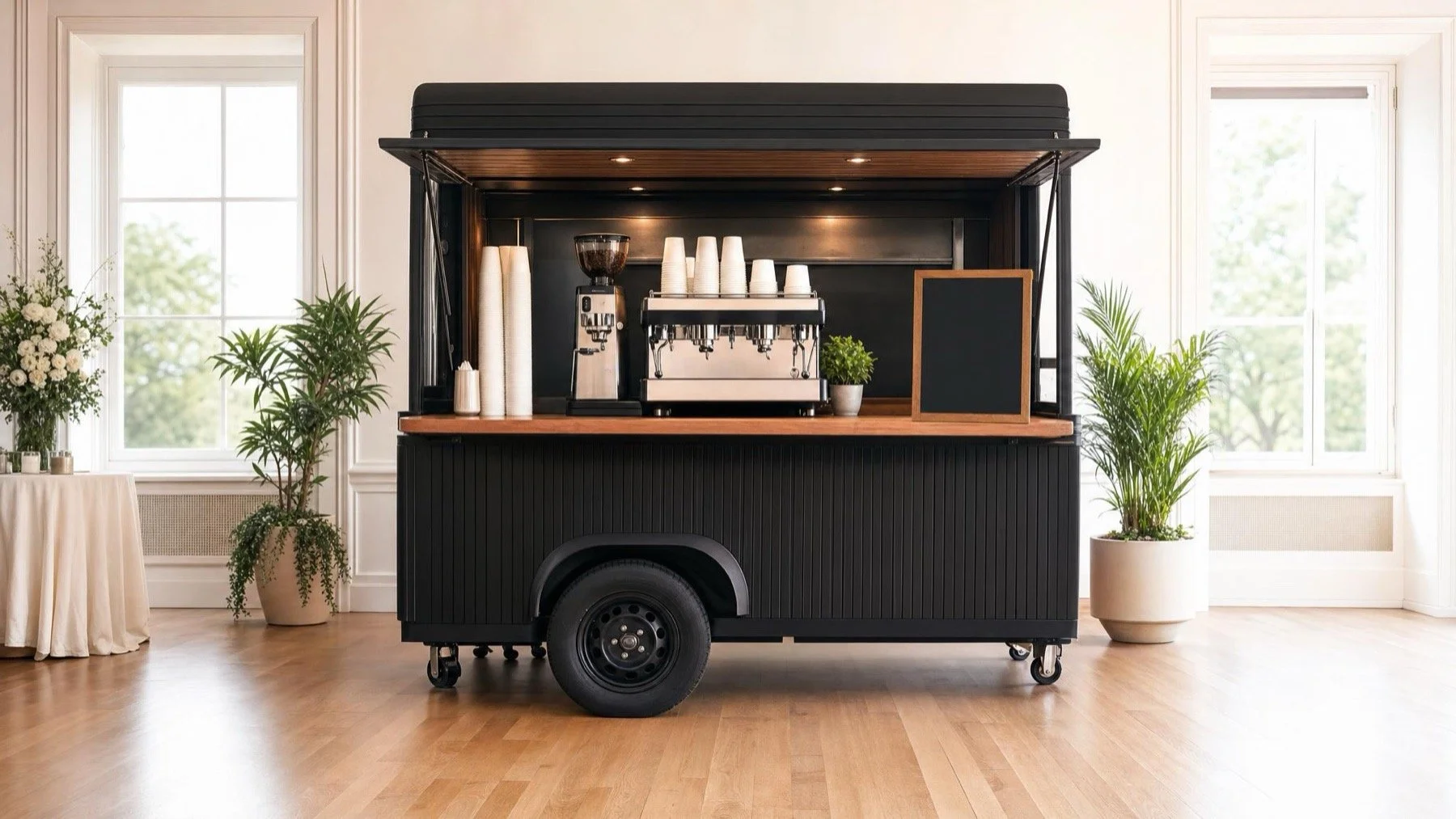
The most common mistake with coffee bar ideas for an event is borrowing them from a kitchen counter at home: a tray of syrups, a row of mugs, a pretty sign. At an event, a barista makes every drink and the crowd tends to arrive at once, so an idea that adds a few seconds to each order turns into a long line. The useful test for any idea is simple. Will it still work when a room of guests leaves a ceremony or a keynote together and heads straight for the bar?
We are NO.3 Coffee, a mobile espresso team serving Toronto and the GTA. This guide sorts event ideas by what they change for your guests: what they can order, how quickly they get it, and how the bar looks while they wait. Choose a few that suit your room rather than trying all of them.
Start with a menu guests can read in ten seconds
The single most useful change to an event coffee bar is a shorter menu. A long list looks generous, but guests tend to read it at the counter, and every pause slows the people behind them. Five or six drinks covers most crowds: an espresso, a latte, a cappuccino, one iced choice and one drink without coffee. Add a seasonal special when the date suits it, and leave everything else for guests who ask.
Our sample menus show the range we draw from, from cortados and flat whites to chai, matcha and hot chocolate. Our sample menus note that guests can ask for an assortment of tea. Listing one tea line on the board is usually enough to tell guests the option exists without crowding the menu.
Give milk choices their own line on the board
Milk is where event orders slow down. When oat and almond milk sit in small print, guests ask about them at the counter one at a time. Print the milk choices as a separate line under the drinks so people decide before they reach the barista. Every NO.3 Coffee booking includes alternative milks such as oat and almond, along with house syrups, cups, lids and napkins. That makes the milk line a layout decision rather than an extra order.
If any guests have allergies, mention them early in the planning so the board and the bar setup reflect them, and ask those guests to speak with the barista directly.
One named drink does more than a themed menu
A signature drink is often the idea guests remember, and one is usually enough. Name it after the couple, the team or the season. Keep the recipe close to something the barista already makes quickly, such as a flavoured latte, and list it first on the board so it becomes the easy choice. Our sample menus describe exclusive drinks named after your event, company or wedding theme.
Several named drinks with similar descriptions tend to cause questions at the counter, which works against the reason you added them.
Put your branding where guests hold it
Branded cups, sleeves and napkins move around the room in people's hands, so they are seen far more often than a banner behind the bar. A menu board in your colours does similar work at the counter, where every guest stops for a moment. Our sample menus list logo cups, sleeves, napkins and signage as branding options.
If branding matters, raise it in your first quote request. Printed items need artwork and approval time, and the schedule depends on what you choose. The custom branding options page explains how logos and menu boards are prepared.
Lay out the bar so the line has somewhere to go
Decor ideas rarely account for the walk. A guest reads the menu, orders, waits, collects the drink and moves away. Each step needs a little room. Put the menu where people see it while they queue, keep the pickup point to one side of the order point, and leave a clear path away from the bar so finished drinks do not walk back into the line.
Capacity matters too. Our homepage notes that a single barista typically serves 30 to 40 drinks per hour. Use that figure to judge whether one barista or two suits a short break when most guests arrive together, and read our guide on how many baristas an event needs for the planning steps.
Ideas that look lovely but slow service
- A toppings table right beside the pickup point, which turns the busiest spot into a second queue.
- Three or four specials with similar names, which leads to questions at the counter.
- A handwritten board with small lettering that only the first few people in line can read.
- A bar tucked into a corner with no clear way out after guests collect their drinks.
Each of these can work with one small change. Move the toppings a few steps away, cut the specials to one, print the board in large type, or turn the bar so its exit faces open floor.
Match the setup to the room
A compact cart and a full espresso bar suit different spaces. Our cart page says the cart is designed to fit into tight spaces while still delivering the full coffee experience. That makes the mobile coffee cart a good match for lobbies, corridors and smaller rooms, while the mobile espresso bar suits larger guest counts and longer service windows. If you are unsure, share a photo of the space and we can suggest the better fit.
Plan your NO.3 Coffee service
Send us your date, venue, guest range and the ideas you liked from this list. We will suggest a menu and a layout that suit the room. Request a quote for your event. We serve Toronto and the GTA, and our service area page lists the cities we cover.