
Non Coffee Drinks and Decaf Options for Event Guests
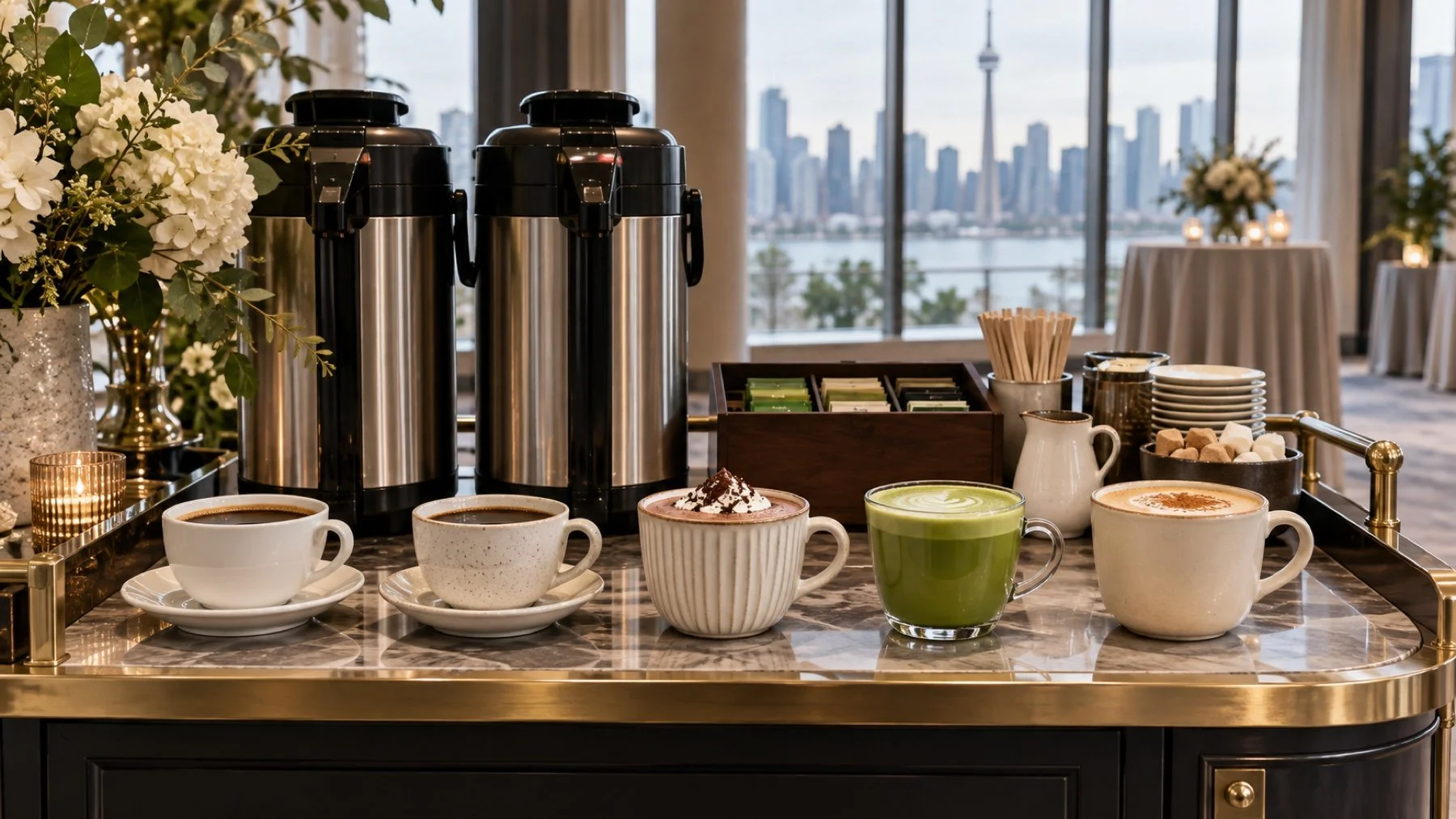
Non coffee drinks need clearer labels than a catch all alternative menu. At NO.3 Coffee, we separate coffee, decaf and other drink requests in the event brief.
A guest who asks for something without coffee may still receive a drink with caffeine. Matcha and chai are non coffee choices, but they are not automatically caffeine free. Decaf coffee still belongs to the coffee category. Clear labels matter when a menu serves mixed ages and preferences.
Build the event menu by identifying who needs decaf, who wants a non coffee drink and who is avoiding caffeine. NO.3 Coffee lists several options across its sample menus. Confirm the ingredients and availability for the booking, then describe the final choices in plain language.
The Coffee Association of Canada reported that 71 percent of Canadians had a coffee beverage the previous day in 2025. That leaves a meaningful share outside the daily coffee group and supports asking the actual audience about decaf and non coffee needs.
Health Canada states that caffeine occurs naturally in coffee and tea and publishes general adult intake guidance. Use that source for broad context, then ask the supplier about the exact ingredients in the event menu.
Map the audience before choosing alternatives
Start with the event type and service time. A morning office gathering may need decaf alongside the regular espresso menu. A family event may benefit from hot chocolate or another clearly described choice. An evening reception may need both because guests have different reasons for avoiding coffee or caffeine.
Ask for needs, not medical histories. Registration or host notes can invite guests to share dietary requests with the planner. Pass relevant information to the supplier early and let the supplier explain what it can prepare. Do not promise a special handling process before that conversation happens.
Understand the three categories
Decaf is coffee with most caffeine removed, not a guarantee of zero caffeine. Non coffee describes the base of the drink, not its caffeine content. Caffeine free applies only when the ingredients and preparation support that description. These distinctions help planners write menus that do not mislead guests.
Health Canada publishes caffeine guidance and notes that caffeine can come from coffee, tea and other sources. An event menu does not need to give medical advice. It should simply name the drink and its important ingredients clearly enough for guests to choose or ask a question.
Choose alternatives that fit the service
NO.3 Coffee lists hot chocolate, matcha, chai, steamed milk, tea when confirmed and several iced choices. Ask which of these can be offered alongside the proposed coffee menu. A short selection is often more useful than a long list that requires extra equipment, ingredients and decision time.
Consider temperature and event pace. A hot drink may suit a winter arrival, while an iced non coffee choice can support a warm indoor conference. Let the service moment guide the mix. The supplier can explain which drinks are practical for the selected station and how they affect the written scope.
Communicate allergies without unsafe shortcuts
Milk choice is not only a preference question. Almond and soy are priority allergens, and dairy may be present in the service area. Ask the supplier to list available milks and explain its handling process. Do not call the bar allergen free, nut free or safe for every guest.
Use direct menu wording and invite guests with allergies to speak with the event contact or supplier. If a request cannot be supported, say so before the event. A smaller menu with accurate information is better than a broad promise that the service environment cannot verify.
Freeze the final menu and labels together
The planner, supplier and venue should work from the same final list. Record the exact drink names, whether each contains coffee or another caffeine source, the available milk choices and any ingredient note the supplier approves. If a custom board is used, proof the words as carefully as the logo.
Review the NO.3 Coffee sample menus, see the full event drink service, and consider the audience guidance on the private events page. Then ask for a current menu recommendation for your date.
Build the menu from guest needs, not beverage labels
Create three columns in the planning brief: decaf coffee, non coffee drinks and confirmed caffeine free choices. Put each proposed menu item in the correct column only after the supplier confirms its ingredients. Decaf coffee can contain a small amount of caffeine. Matcha and chai are made without coffee but commonly contain caffeine. Hot chocolate or steamed milk may fit a non coffee category, while the ingredient list and preparation still need review for dietary requests.
Health Canada publishes general caffeine guidance for healthy adults and for pregnancy or breastfeeding. An event planner does not need to interpret that guidance for each guest. The useful action is clear labelling. Name the beverage, identify whether it contains coffee or tea, and avoid a caffeine free claim unless the supplier confirms it. Guests can then make their own choice or ask a direct question without relying on a vague alternative drinks heading.
Ask the actual audience in a respectful way. Registration can invite dietary and beverage requests without asking for a diagnosis. A private host can collect needs through the RSVP process. An office organizer can ask for preferences while avoiding a promise that every request will be available. Summarize the responses by category and send them to the coffee team early enough for the menu recommendation to address them.
Keep choice useful and service practical
A long list is not automatically inclusive. Each option adds ingredients, storage, menu copy and an ordering decision. Choose a small set that covers distinct needs. One decaf coffee route, one clearly described non coffee option and the available milk choices may serve the brief better than several drinks that overlap. Ask the supplier which combination fits the proposed equipment and service window.
Write allergy communication separately from preference language. Almond and soy are priority allergens, dairy may be present and shared tools or surfaces may affect handling. Ask NO.3 Coffee what it can state about the selected event setup. Share known allergies and let the team explain limitations. If a request cannot be accommodated safely, tell the guest before the event instead of relying on an improvised substitution at the counter.
Proof the menu from a guest viewpoint. Replace broad phrases such as healthy, safe or caffeine friendly with factual descriptions. Keep coffee, decaf and other drinks visually distinct. Add ingredient notes only when they have been checked for the final event. If the menu changes, update the printed sign, planner brief and barista copy together. Consistent wording is part of service quality because it prevents the same drink from being described three different ways.
Review the menu for ambiguous promises
Circle words that describe health, safety or absence, including free, safe, clean and healthy. Replace them with the exact ingredient or preparation information the supplier can verify. A drink can be made without coffee and still contain caffeine. A plant based milk can still involve an allergen. Plain descriptions give guests more useful information than broad reassurance.
Check whether the menu distinguishes a default preparation from available changes. If decaf or a milk choice is available only when requested, the board should make that process clear without promising every variation. Ask the coffee team how guests should order and what the barista can explain at the counter. The final wording should match live service.
Keep the source and date for any general caffeine guidance used in planner notes. Do not copy intake numbers into a decorative menu unless they serve a real purpose and are presented accurately. The event menu is not a health brochure. Its job is to identify drinks, surface relevant ingredients and direct specific questions to the right person.
For children or guests who are pregnant, breastfeeding or sensitive to caffeine, avoid deciding on their behalf. Provide the verified drink description and let the guest or caregiver choose. If the supplier cannot confirm whether an ingredient contains caffeine, do not label the drink caffeine free. Offer another clearly described option or invite a direct question before ordering. This approach respects individual decisions without turning the event team into a medical authority. It also gives the menu a durable rule that works when recipes or seasonal choices change.
Give the barista team a final menu version rather than a chain of draft notes. Mark which descriptions have been checked, who answered the allergy questions and when the board must be printed. If a requested option cannot be confirmed, remove that promise from the sign and contact the affected guest through the planner’s normal event channel before the service begins.
Confirm the caffeine and dietary details
- Guests requesting decaf coffee
- Guests requesting a non coffee choice
- Any need for a confirmed caffeine free option
- Known allergy and milk requests
- Plain descriptions for each menu item
- Supplier approval of the final menu board
Plan your NO.3 Coffee service
Tell NO.3 Coffee which coffee, decaf and non coffee choices your audience needs. Request a current menu and current event proposal for the event. We serve Toronto and the GTA. Review the current service area.